2026: The Year Workforce Intelligence Meets Deskless Ambition
Deskless workers are hungry for growth. Investing in these employees can unlock operational excellence, drive innovation from the ground up, and foster a fundamentally healthier and more resilient workforce.
By Steve Foster, Executive Chairman, meQ
Nearly 60% of manufacturing workers believe they must constantly improve or risk falling behind.
When I saw that statistic from meQ's upcoming Winter 2026 State of the Workforce Report, I read it twice. These aren't software engineers. These are people on factory floors, in warehouses, driving delivery routes—the backbone of operations.
What stopped me was where deskless workers rank in their drive for continuous improvement: second only to tech employees. For decades, we've associated such hunger with knowledge workers. But the data reveals that the appetite for growth is there, across every sector.
I’ve seen it myself, in my years as a police officer and in the Air Force before building companies. All people want to grow and thrive in their careers, even more so in this era of breakneck change. But the pathways for development aren’t always built for deskless employees.
Deskless workers represent untapped potential. Companies that invest in accessible development programs will unlock operational excellence from employees closest to the work.
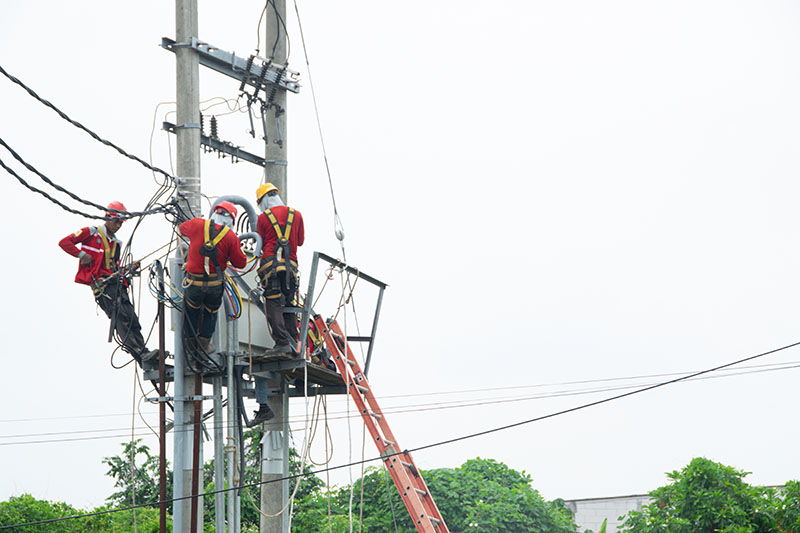
How Workforce Intelligence Turns Ambition Into Performance
Here's what gets missed. Organizations can't drive continuous improvement without first understanding what their workforce actually needs.
Piling on new responsibilities and technical training without insight into people's capacity to handle them sets everyone up to burn out, not break through.
That's why workforce intelligence is step one. Before you invest in training programs or new initiatives, you need to identify risk factors and resilience gaps across your population. This intelligence lets you target support where it matters most.
And what it reveals, consistently, is that training in resilience is the foundation for everything else. Resilience isn't guesswork—it's a set of learnable competencies like emotion regulation, problem-solving, and measured optimism that help people manage stress and adapt to change.
Research across more than 550,000 individuals shows resilience predicts virtually every outcome organizations care about:
- Resilient employees are 60% less likely to experience burnout
- They're 31% more engaged
- They're 80% less likely to exhibit signs of depression
Resilience training is particularly protective in demanding environments. In high-strain workplaces where employees face pressure to deliver quickly with limited autonomy, resilience offers its highest protection against depression, absenteeism, and productivity.
The ROI of Meeting Workers Where They Are
When organizations use workforce intelligence to make resilience training accessible to deskless workers, results speak for themselves.
People with low resilience at enrollment see exceptional improvement. Someone beginning a resilience program with a low baseline could expect 10% improvement with just four hours of training.
The dosing effect is nearly linear. Each additional hour leads to measurable gains. And those gains compound:
- Resilient employees experience 66% greater reduction in burnout
- They're 33% more likely to believe effort leads to reward, avoiding toxic tradeoffs associated with grind culture
These translate to business outcomes. Companies with highly resilient workforces consistently outperform the market. Among meQ's largest publicly-traded customers, organizations with high resilience outperformed the Dow Jones Industrial Average by 2.5X over seven years.
The financial impact at the individual level is equally significant. Commonly-achieved resilience improvements can
raise performance by $2,005 per member, or more than $2.5 million per 10,000 employees.
Making Development Accessible
Unlocking this potential requires intentionality. Deskless workers need programs that meet them in the flow of work, any time they need it, not programs built on carving out time for lengthy sessions.
The truth is, resilience training works across every demographic.
Even highly paid, highly educated employees are at risk. Forty-one percent of those earning $150,000 or more have low resilience, as do 47% with master's degrees. Everyone benefits, but approach matters.
For deskless populations, accessibility is everything. Direct language over jargon. Relatable scenarios over abstractions. Multiple touchpoints making engagement convenient. Messaging that leads with tangible personal benefits: better sleep, less frustration, more control when things get chaotic.

The Competitive Advantage Hiding in Plain Sight
Organizations investing in deskless worker development in 2026 aren't just doing the right thing—they're building competitive advantage from the ground up. These employees don't need convincing to care. As the data shows, they're not lacking drive.
What they need is investment that recognizes them as whole people, not productivity units:
- Investment in workforce intelligence to identify where support matters most to them.
- Investment in resilience alongside technical skills to improve their capability to adapt as the business changes.
- Investment in mental well-being alongside operational efficiency to boost employee experience and result in cost savings, particularly healthcare costs.
When organizations provide that—using workforce intelligence to drive resilience and performance in ways that respect deskless workers' time and lived experience—the return is substantial and sustained.
Ready to build resilience in your workforce? meQ's proactive mental health platform upskills your employees to thrive under pressure.
Book a call to learn how leading organizations are preparing now.