Change Is Expensive. Here’s How HR Can Stop Paying Full Price.
Most organizations already have the tools to address change fatigue. The missing piece is knowing where to look. Join us on May 6 at Behavioral Health Tech to find out.
Most organizations already have the tools to address change fatigue. The missing piece is knowing where to look. Join us on May 6 at Behavioral Health Tech to find out.
By Andrew Shatté, Chief Knowledge Officer & Co-founder, meQ
Every organization is running a tab right now. AI acceleration, restructuring, leadership transitions, economic uncertainty: these aren’t isolated line items. They’re compounding interest.
Your employees are paying in lost focus, emotional exhaustion, and time away from work. Your organization is paying in healthcare claims, disability leave, and eroding productivity.
This cumulative weight is called change fatigue. And HR leaders are increasingly the ones being asked to settle the bill.
Join us Wednesday, May 6, from 12–1 pm ET with Behavioral Health Tech for a live conversation on what constant organizational change is really costing your workforce—and what HR can do about it. I’ll join forces with Latisha Beringer, Vice President of Global HR for Accelo, to share what we’re seeing on the front lines.

Let’s take a clear-eyed look at how change fatigue manifests at the workforce level, why it’s harder to see than you’d think, and what HR leaders are doing to get ahead of it.
The Books Don’t Match: Why Leaders and Employees Experience Change Differently
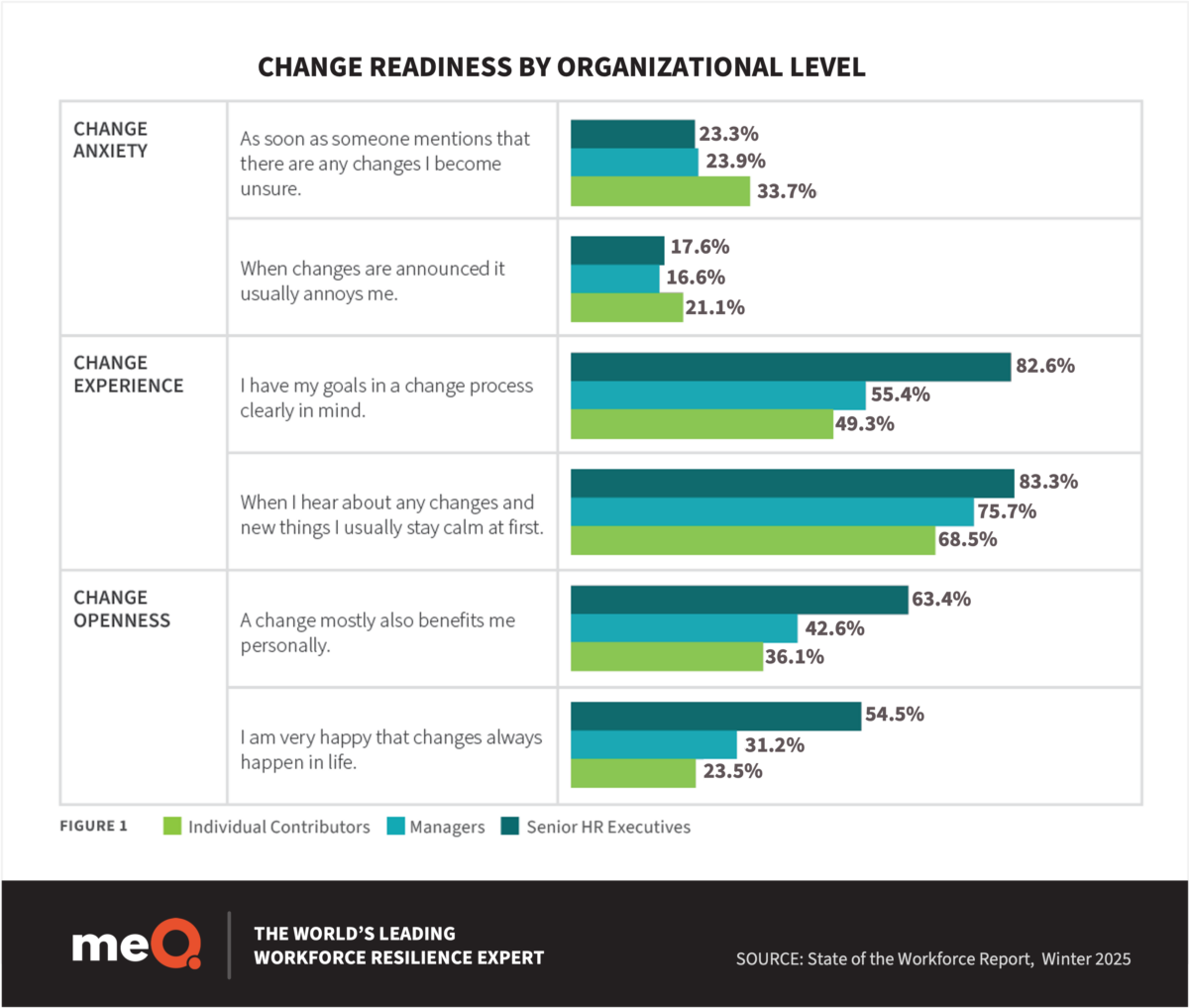
Organizational change management conversations rarely factor in the fact that leaders and employees do not read from the same ledger for what change costs.
HR executives tend to report:
The workforce—especially individual contributors—sees things differently:
That mismatch is a structural problem with real consequences for team performance, focus, and long-term capacity.
Change Fatigue Has a Paper Trail: How to Spot It Before It Spreads
The early warning signs of change fatigue are subtle, but they are trackable. Here’s what to watch for:
Employees aren’t disengaged because they stopped caring. They’re worn down because the pace hasn’t let up.
Left unaddressed, these warning signs escalate:
It’s not just a people problem; it’s a balance sheet problem. And the pace of technology advancement driven by AI has actually made things harder. New tools and workflows are announced before the last rollout has settled. For employees already carrying the weight of prior changes, that acceleration tips the balance into change fatigue.
Ready to Balance the Books? Join Us May 6.
In our upcoming BHT webinar, The Cost of Constant Change—and What HR Can Actually Do About It, we’ll cover how change fatigue develops, what it costs, and what HR leaders can do to respond in ways that work—for their people and their business.
This session is designed for HR, People Analytics, Total Rewards, and well-being leaders looking for practical insight from peers navigating the same challenges.
Wednesday, May 6 | 12–1 pm ET | Hosted by Behavioral Health Tech
Save your spot: Register here